


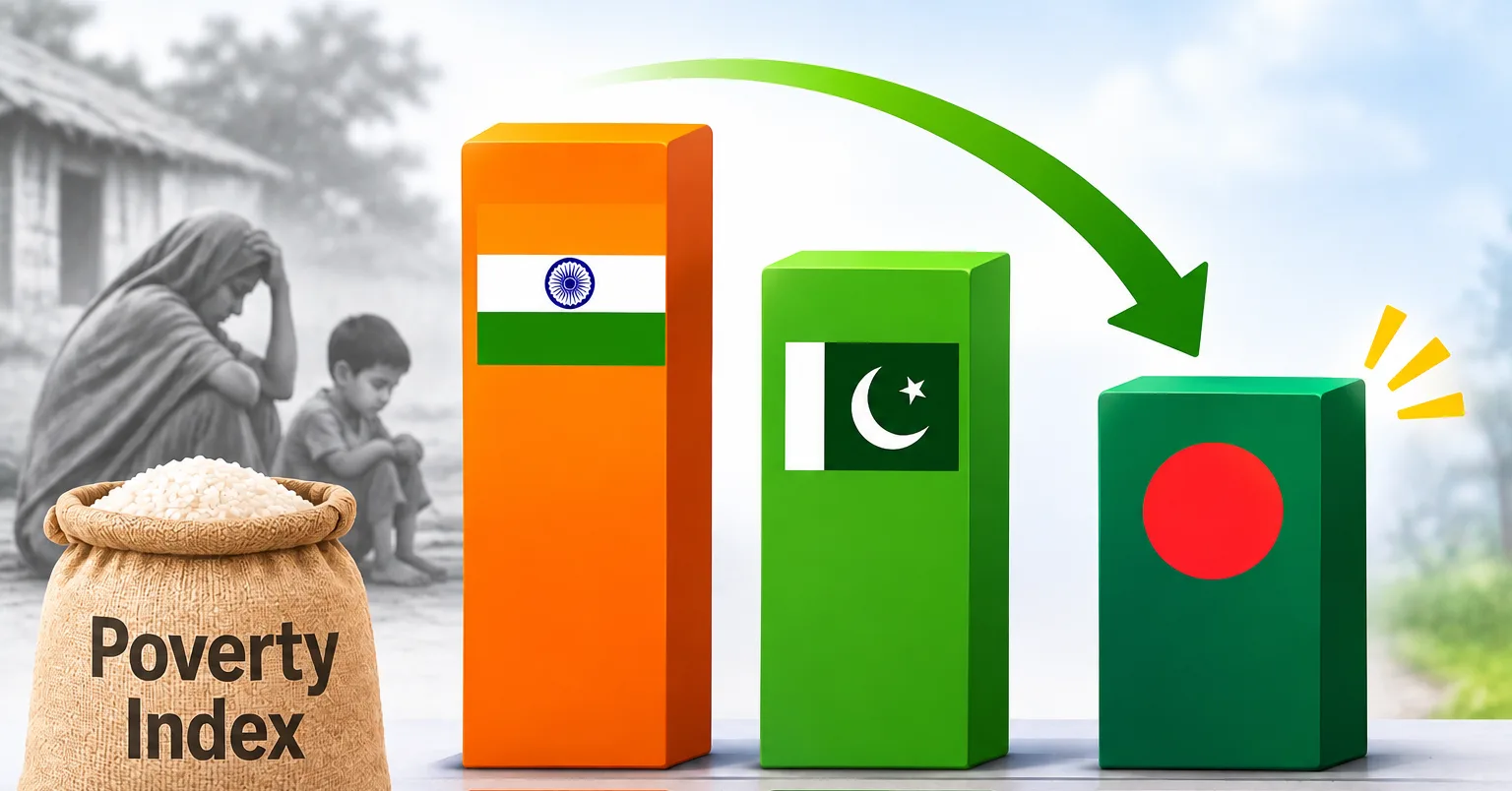
Bangladesh has a lower rate of multidimensional poverty than neighbouring India and Pakistan, according to the United Nations Development Programme’s (UNDP) 2026 Global Multidimensional Poverty Index (MPI).
The report estimates that 14.9% of Bangladesh’s population lives in multidimensional poverty, compared with 16.4% in India and 38.3% in Pakistan.
Afghanistan has the highest rate among the countries mentioned, with 64.9% of its population experiencing multidimensional poverty.
The 2026 report, prepared by the UNDP in collaboration with the Oxford Poverty and Human Development Initiative (OPHI), examines overlapping disadvantages in areas such as health, education and living standards.
According to the report, around 15 out of every 100 people in Bangladesh experience multidimensional poverty. The figure rises to approximately 16 in India and 38 in Pakistan.
However, the estimates are based on household surveys conducted in different years. Bangladesh’s figures use 2022 survey data, India’s use data from 2019–2021, and Pakistan’s are based on a 2017–2018 survey.
The figures therefore offer a comparison of the latest available country estimates rather than a snapshot of all three countries in the same year.
The report also highlights a concerning global trend, estimating that approximately 1.2 billion people across 108 developing countries are living in acute multidimensional poverty.
This represents 18.9% of the combined population covered by the index.
More than half of those experiencing multidimensional poverty are children, while over eight in every 10 live in rural areas.
Unlike income-based poverty measurements, the MPI considers several forms of deprivation simultaneously, including inadequate nutrition, limited access to education, poor sanitation, unsafe drinking water, inadequate housing and lack of basic household assets.
The findings underline the importance of addressing poverty through improvements in healthcare, education and living conditions, alongside efforts to increase household incomes.





Comments
No comments yet. Be the first to write one.
Leave a comment