

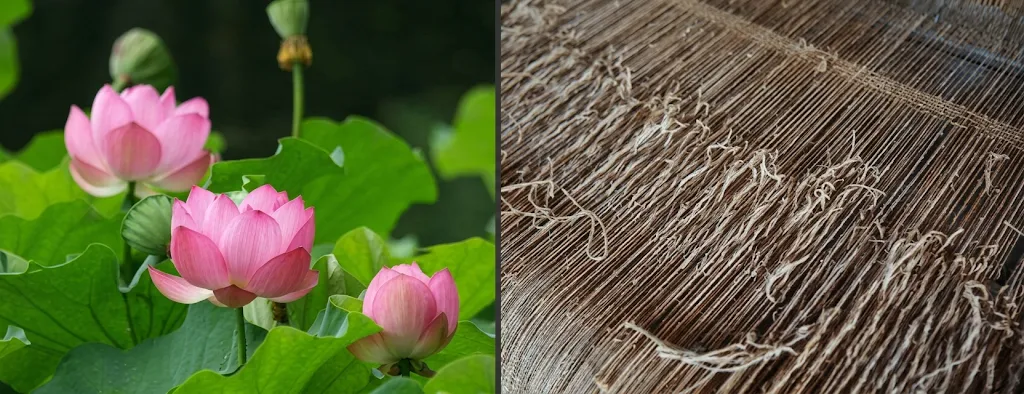
Bangladesh is exploring a new chapter in its textile industry with the successful production of lotus silk, a rare and luxurious fabric made from the stems of lotus flowers.
Once famous worldwide for its fine Dhakai muslin, Bangladesh has now demonstrated another remarkable textile-making skill. Local artisans have produced a six-yard scarf using thread extracted from lotus stems, also known as lotus silk.
The scarf was woven using traditional Jamdani techniques on a pit loom and later presented to UNESCO. It is currently displayed at the Bangladesh National Commission for UNESCO office in Segunbagicha, Dhaka.
Researchers believe the achievement could open new opportunities for Bangladesh's textile sector, particularly because the country has numerous lotus ponds and a relatively low labour cost.
What Makes Lotus Silk So Valuable?
Lotus silk is a rare textile made from the sticky substance found inside the stems of lotus flowers. When the stems are broken into small sections, fine fibres emerge from the adhesive material. Artisans carefully draw and twist these fibres by hand to produce thread.
The resulting yarn has a naturally soft, pale yellow appearance.
Lotus silk is considered one of the world's expensive natural textiles. According to the information provided by researchers, one kilogram of lotus silk yarn can cost between $2,000 and $3,500, while fabric prices can range from $25 to $1,000 per yard, depending on quality and craftsmanship.
Myanmar, Vietnam and Cambodia have long traditions of producing and using lotus silk. In Bangladesh, however, the craft is relatively new.
An Environment-Friendly Alternative
Lotus silk is produced from natural plant material through a largely manual process. Unlike conventional silk production, it does not require silkworms, making it an alternative for those interested in animal-free textiles.
The fibre is naturally soft, lightweight, breathable and resistant to wrinkling. It can also absorb dyes effectively, making it suitable for different colours and designs.
Researchers involved in the project say lotus silk production requires little water and does not depend on fossil fuels in the traditional fibre-extraction process. These characteristics could make it an attractive option for environmentally conscious textile production.
The pink lotus (Nelumbo nucifera) is considered particularly suitable for producing the fibre, although other lotus varieties may also be used.
Lotus Stems Could Create New Income Opportunities for Rural Women
One of the most promising aspects of lotus silk production is its potential to create employment for rural women.
Women in Ranokail village of Kanaipur, Faridpur, have demonstrated that they can produce fine lotus silk yarn after only three days of training. Within six months, they had developed the ability to make particularly fine threads.
Lotus stems are broken at intervals of approximately one inch, allowing the adhesive material inside to emerge. The fibres are then twisted by hand to form yarn. Using more stems produces thicker thread, while fewer stems can produce finer yarn.
According to researchers, August to December is generally the most suitable period for extracting lotus silk in Bangladesh, when lotus flowers are widely available.
The process, from collecting stems to producing finished fabric, can take around a month.
Bangladesh May Have a Competitive Advantage
Bangladesh reportedly has around 35–40 lotus ponds across different districts. Many of the larger ponds are government-owned and retain water throughout the year, providing potential access to raw materials.
Another advantage is the ability of lotus plants to regenerate their stems after harvesting. According to lotus researcher Shikdar Abul Kashem Shamsuddin, new stems can grow approximately six to eight inches per day under suitable conditions, allowing repeated collection.
Bangladesh may also require fewer lotus stems than some established producers.
According to Mohammad Ayub Ali, head of the Planning and Implementation Department of the Bangladesh Handloom Board, producing one kilogram of lotus silk requires approximately 30,000 stems in Cambodia and Vietnam, while the same quantity could potentially be produced using around 15,000 stems in Bangladesh.
Researchers also believe that relatively low labour costs could help the country compete in the international luxury textile market.
The People Behind Bangladesh's Lotus Silk Project
The six-yard scarf was produced under a research initiative titled “Diversity, Utilisation and Conservation of Lotus Flowers”, led by the Bengal Plants Research and Development (BPRD).
Former University of Dhaka professor Dr Rakhhari Sarkar served as a consultant for the project.
Mohammad Manjurul Islam, operations manager at the Bangladesh Handloom Board, assisted with yarn production, dyeing and weaving. Mohaiminul Islam, who previously worked with the muslin project, also contributed.
The final fabric was woven by experienced Sonargaon artisan Asiya Begum.
The Bangladesh National Commission for UNESCO provided financial support and supervision, with Senior Programme Officer Mohammad Tajuddin offering guidance and assistance.
Can Lotus Silk Become Bangladesh's Next Luxury Textile?
Researchers believe the successful pilot project could be expanded into commercial production with proper planning and investment.
Mohammad Ayub Ali suggests that jacquard and semi-automatic looms could help increase fabric production while maintaining quality.
If developed on a larger scale, lotus silk could create new income opportunities for rural women, encourage the preservation of traditional weaving skills and diversify Bangladesh's textile industry.
With abundant lotus resources, skilled artisans and comparatively low labour costs, Bangladesh has the potential to establish a distinctive position in the global luxury fabric market.
The country's historic association with Dhakai muslin demonstrates its textile-making heritage. Lotus silk could become another example of how traditional craftsmanship and innovative research can create new opportunities for the future.




Comments
No comments yet. Be the first to write one.
Leave a comment