


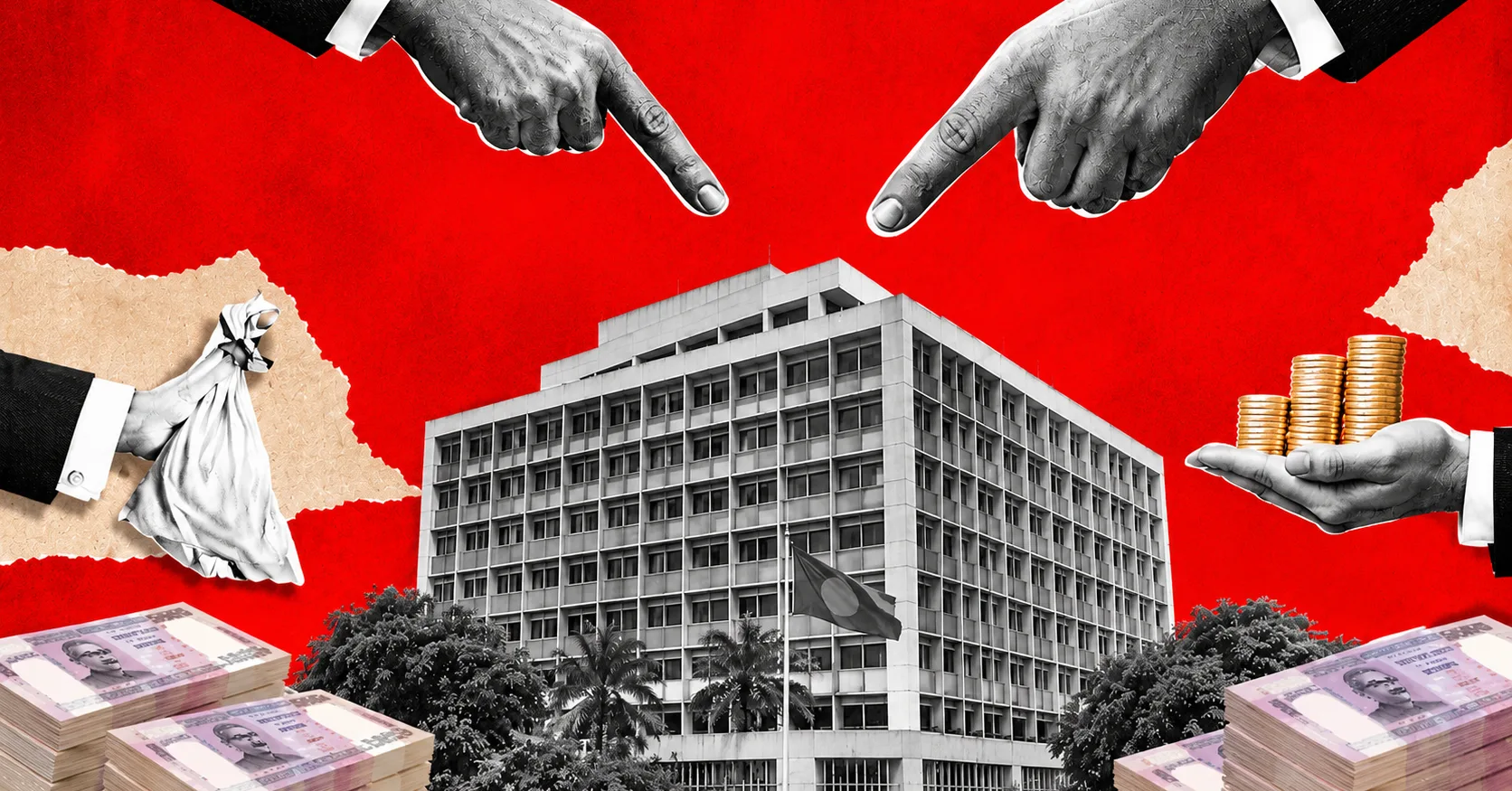
Defaulted loans in Bangladesh's banking sector have surged to Tk 5.97 lakh crore, accounting for 32.17 percent of total outstanding loans as of September this year, Finance Minister Amir Khosru Mahmud Chowdhury told parliament.
The figures highlight a sharp deterioration in the country's banking sector over the past five years, with the proportion of defaulted loans increasing by 24.54 percentage points during the period.
The finance minister disclosed the information in parliament on Monday while responding to a question from Jamaat-e-Islami MP Rafiqul Islam Khan. The question-answer session was chaired by Speaker Hafiz Uddin Ahmad.
Defaulted Loans Rise Sharply Over Five Years
According to the finance minister, Bangladesh's defaulted loans have increased significantly every year since 2021.
The figures presented in parliament show the following trend:
2021: Tk 94,306.21 crore (7.24%)
2022: Tk 112,901.82 crore (7.64%)
2023: Tk 135,710.45 crore (8.39%)
2024: Tk 305,073.38 crore (17.83%)
2025: Tk 544,831.88 crore (29.92%)
September 2026: Tk 597,155 crore (32.17%)
The latest figures indicate that defaulted loans have grown substantially, raising concerns about financial stability, loan recovery and discipline in the banking industry.
Bangladesh Bank Takes Steps to Control Defaulted Loans
Responding to a separate question from Jamaat MP Kamrul Hasan, the finance minister said Bangladesh Bank had introduced several priority-based measures and structural reforms this year to restore discipline in the banking sector.
The initiatives are aimed at reducing bank-specific defaulted loans, accelerating the settlement of long-standing bad loans, improving banks' balance sheets and establishing stronger institutional and legal frameworks for loan recovery.
The central bank is also maintaining regular communication with the boards and management teams of banks where classified loans exceed 10 percent of total outstanding loans.
During these discussions, authorities review the reasons behind rising defaulted loans, identify obstacles to recovery and assess individual banks' action plans.
Banks have been instructed to prepare and implement recovery strategies, with progress subject to regular monitoring.
Special Exit Facility Introduced for Long-Overdue Loans
The finance minister also said a Special One-time Exit Facility had been introduced to help settle long-overdue loans that have little possibility of recovery through conventional procedures.
Under the facility, eligible borrowers will be allowed to settle their outstanding loans under specified conditions until December 2026.
The initiative is expected to help resolve long-pending defaulted loans and remove distressed assets from banks' balance sheets.
The government is also pursuing other measures to strengthen the banking sector, improve loan recovery and restore confidence in financial institutions.




Comments
No comments yet. Be the first to write one.
Leave a comment